Verify before engagement
Check material identity, authority, insurance, qualifications, and transaction facts before relying on them.
A private, voluntary standard designed to make verification, lawful operation, freight integrity, and accountability visible across commercial transportation.
Draft 4.8 · September 2026 · For development, legal review, stakeholder review, and pilot testing
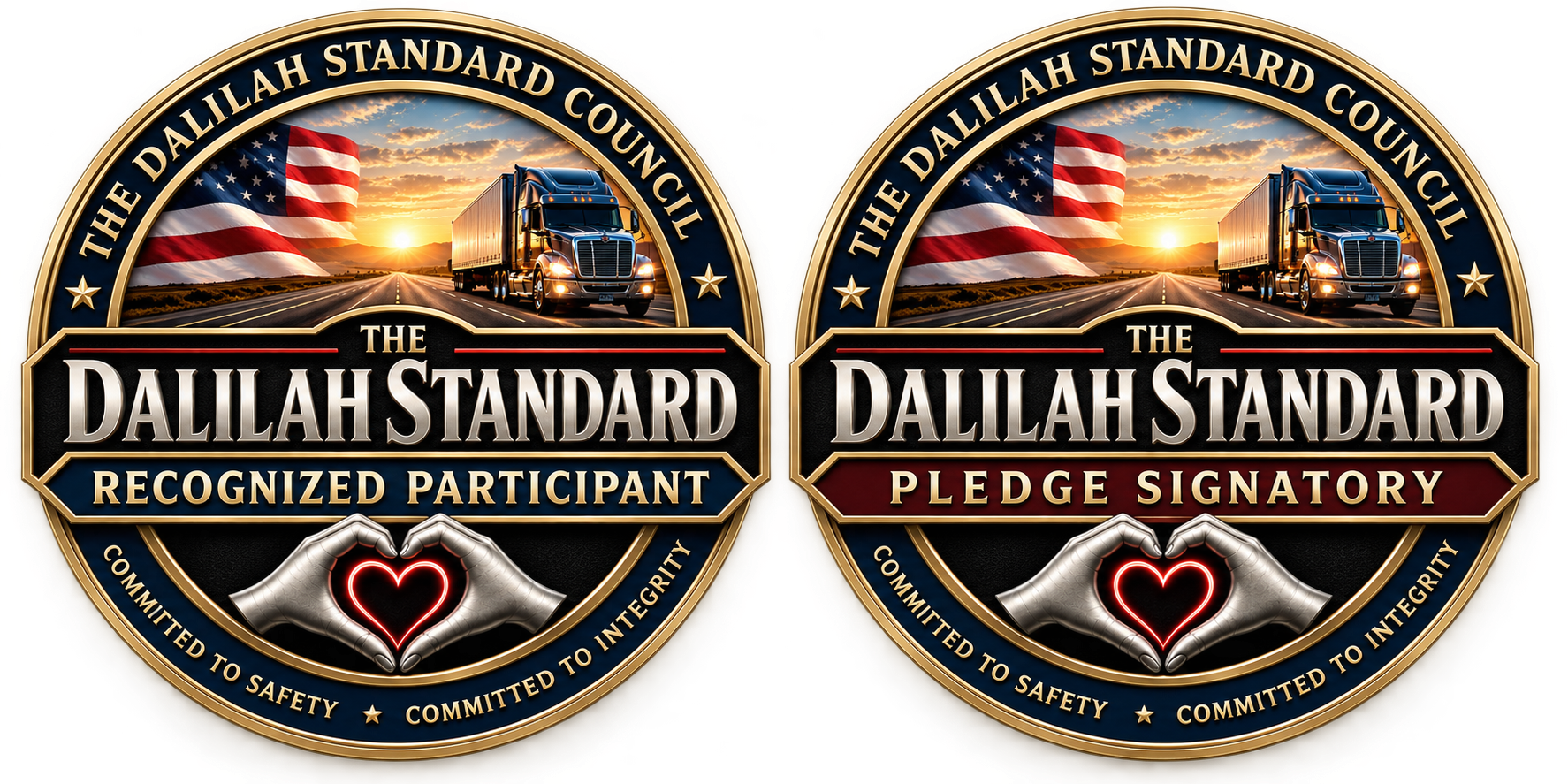
DISTINCT MARKS · STATUS VERIFIED IN THE REGISTRY
The central question is more than whether a shipment moved. Did the people responsible take reasonable steps to verify who was involved, whether they were qualified and authorized, and how meaningful warning signs were handled?
Check material identity, authority, insurance, qualifications, and transaction facts before relying on them.
Unless a condition is expressly disqualifying, investigate the underlying facts and document the response.
Price pressure, delivery deadlines, and capacity shortages do not excuse knowingly unsafe or fraudulent conduct.
Material changes call for monitoring, review, corrective action, or revalidation. A one-time check is not enough.
Participation is voluntary. Recognition, once accepted, requires continuing compliance with the requirements for the approved role and scope.
An organization publicly commits to the principles of safety and integrity. A pledge is a statement of intent; it is not evidence based recognition.
The identified entity is reviewed against common and role-specific requirements, with evidence, audit, monitoring, and a defined recognition status.
The program is in draft. Applications may be submitted for review. A submission creates no pledge or recognition status; publication is controlled by the program administrator.
Each organization must satisfy the common requirements and the appendix applicable to its role. Multiple roles require separate review.
The Dalilah Standard Council administers the program. A separate 14-member Governing Council oversees standards, recognition integrity, and enforcement policy. A sponsor, founder, vendor, or administrator has no veto over a properly constituted Council decision.
Seats span carriers, brokers, forwarders, shippers, drivers, finance, insurance, law, enforcement, fraud, compliance, public safety, and a full-voting family member representative of a person killed or seriously injured in a commercial vehicle crash.
Meet the governing structureThe draft manual defines evidence based review, monitoring, investigations, corrective action, sanctions, appeals, and public status rules. Recognition cannot be purchased or maintained by a badge alone.
The Dalilah Standard is a private, voluntary program. Recognition is not government approval, an FMCSA safety rating, operating authority, a license, a warranty, or a guarantee of future conduct. Independent due diligence remains necessary.
Review the governance, role-specific requirements, monitoring, enforcement, registry, and appeals provisions in Draft 4.8.
The cover artwork retains a Version 4.0 label; the document text is Draft 4.8.Built to make safety and integrity commitments measurable, documented, and accountable.
Back to top ↑Search pledge signatories, recognized participants, and published former or adverse statuses by legal name or identifier.
Search the registry ↗